Solar Canopies and EV Charging: What Multifamily and Commercial Property Owners Need to Know Before They Build
Solar Canopies and EV Charging: What Multifamily and Commercial Property Owners Need to Know Before They Build
Parking lots are quickly becoming some of the most valuable real estate on a commercial or multifamily property. A shade structure that used to just protect cars from Florida’s sun can now generate power, host EV chargers, and add real amenity value, all without giving up a single parking space.
We have seen a sharp rise in questions from developers, commercial property owners, and municipalities about solar canopies paired with EV charging. Before recommending a system size or layout, our approach starts the same way it always does: understand the building’s actual energy use and electrical capacity first, then design the generation and charging infrastructure to match.
Why Solar Canopies Make Sense for Florida Properties
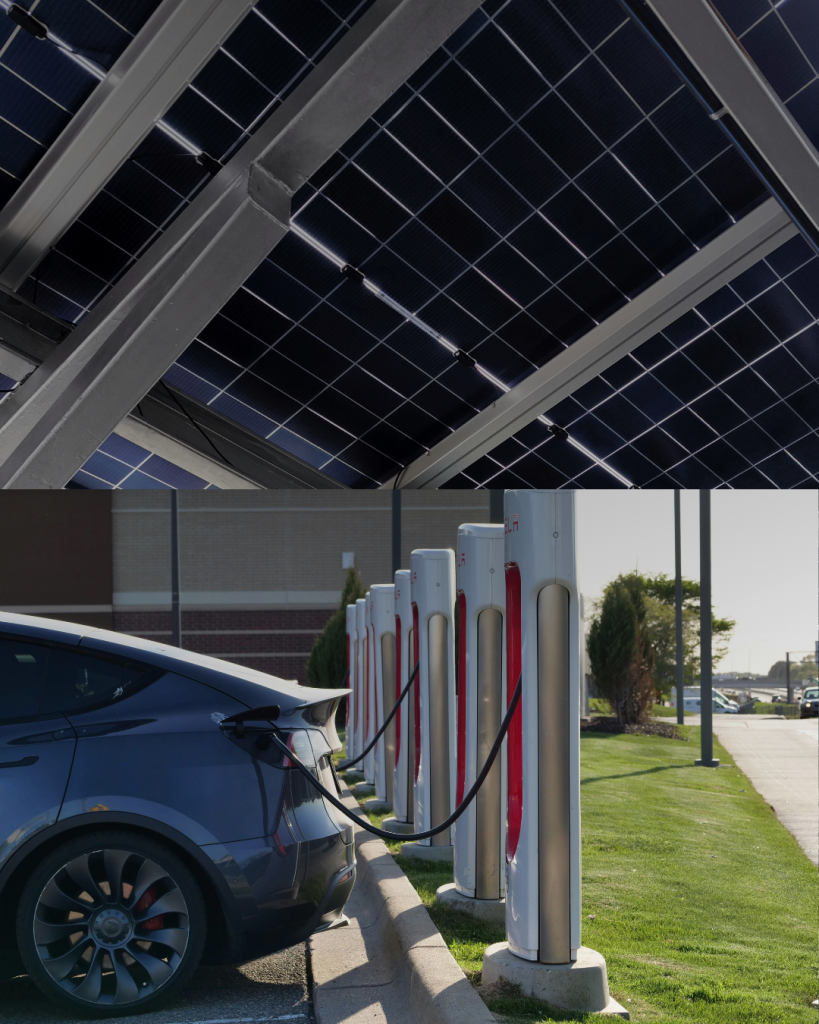
A solar canopy is a freestanding structure, typically installed over parking areas, that holds solar panels on an elevated racking system. Instead of competing with roof space or green space, canopies put unused pavement to work.
For Florida properties specifically, canopies solve two problems at once. They generate clean power, and they provide real shade and weather protection in a climate where covered parking is already a sought-after amenity. For multifamily communities, that shade can be a meaningful differentiator in leasing conversations, similar to the efficiency gains we saw play out on our Atlantic Housing multifamily project. For commercial and retail sites, it improves the customer and employee experience while producing power on site as part of a broader commercial solar strategy.
We have direct experience designing and installing Lumos Solar canopy systems, which gives us a strong reference point for structural design, panel layout, and integration with existing parking lot infrastructure on projects of this type. Canopies are one of several ways we help land-constrained or space-conscious properties get more out of a solar system, alongside approaches like the floating solar installations we have covered previously.
Where EV Charging Fits In
Pairing a canopy with EV charging is a natural next step, and it is the piece we are fielding the most questions about right now. Multifamily owners are seeing resident demand for on-site charging as EV adoption grows. Commercial property owners are looking at EV charging as both a tenant or customer amenity and, in some cases, a revenue opportunity.
As a licensed electrical contractor and authorized Tesla dealer, we handle the electrical side of these projects directly rather than subcontracting it out. That matters for canopy and EV charging projects in particular, since the electrical scope (panel capacity, conduit runs, load management, and charger placement) is often more complex than the solar structure itself.
Reduce Before You Produce, Even Here
Our building-science-first approach does not stop at insulation and HVAC. Before we size a solar canopy or an EV charging array, we look at the property’s actual electrical load and how it is likely to grow. A parking lot with ten EV chargers pulls very differently than one with two, and a canopy sized without that context can mean paying for more solar capacity than the property needs, or under-building the electrical infrastructure to support charging as demand increases.
This assessment step is also where we help clients avoid a common and costly mistake: oversizing a system based on assumptions rather than actual demand data.
A Word on Incentives
Federal incentives for both commercial solar and EV charging infrastructure have changed significantly over the past year, and the rules continue to shift. Because eligibility windows, construction deadlines, and credit percentages are changing, we recommend treating any specific incentive figures as a starting point for a conversation with your tax advisor rather than a guarantee, and we are happy to help identify which programs may still apply to a given project timeline.
Getting Started
If solar canopies and EV charging are on your radar for an upcoming project, the right first step is not a proposal. It is a site and load assessment that tells you what the property can actually support and where the opportunity is. From there, we can talk through canopy design, electrical scope, and how EV charging fits into the broader plan. If you have general questions first, our FAQ page is a good place to start.
Reach out to 15 lightyears to start that conversation.